Friday, February 29, 2008

ask Not What Disney Can Do For You, But What You Can Do For Disney

Reading/listening to the Minow’s Speech I’ve looked real hard at today’s TV and how broadcasting overall should have changed for the better. The points he brings up are timeless, in my mind. Broadcasting is the most powerful voice in the world he quotes, “It must ring with intelligence and leadership…be aware of the world.” He also refers back to Gov. Collin’s speech, “public interest must have a conscience…build character, citizenship, and intellectual stature of people.” In today’s society we basically see no of these factors in television. Even newscasts are becoming a comedic performance and full of useless graphics and crawls that don’t mean anything. I would say TV today doesn’t help us build character or how to better ourselves as people, but rather brings out and talks about people who have failed in life in hopes that we’ll learn from their mistakes (I guess). You could be learning more information about the Iraq situation and then see a crawl that says Brittany Spears in back in rehab, or J Lo named her twins Walker and Texas Ranger…who cares. I get a kick out of watching old 50’s TV and how they can be relatively related to present day shows, but a little more “classy.” Minow talked about bringing back the 50’s style shows, but that will never happen (very farfetched).

As for the Disney piece, I found it amazingly interesting. Walt had a good thing going on and the whole idea of “total merchandising” was genius. Disney movies are seen as being acceptable to all ages, and parents have no worries about purchasing any of their products for their children, or even themselves. TV seen by ABC then can be seen all throughout TV today, in the way it targeted families rather than adults. Kids are the ones watching TV for long periods of time, so why not have shows relating to them, but also make the shows appeal to parents as well. I do kind of find it funny how Disney brings back old movies to DVD with enhanced features making them appear to be timeless classics, in which they are. My buddy brought up the fact he bought the original Aladdin on DVD like a month ago at the bar we were at and you’d be amazed how many people know the lyrics to “It’ A Whole New World” (now that’s what makes a classic a classic).

Scattered, But There is Something Here I Swear

Content is something to be considered no matter what. Remember that line I have to build from it. There are twenty two minutes of a thirty minute block for every sitcom (do the multiplication yourself for the hour and two hour long programs). The other time, eight minutes for a half hour, goes to marketing of different things, I italicize this because every noun is becoming a thing or has become already I’m not positive of the exact date of the shift. Television is, amongst numerous other well argued occupations, a marketing machine. “They” have it out for us and what us to buy buy buy, right? Well here is my argument for this class and I’m sure the rest of my life. There is twenty two minutes for story and eight for sales for a reason, the content matters. You cannot market things unless there is something with a little bit of beauty surrounding it. So without a good story, a funny joke, a relatable character(s), or attractive people you cannot build an empire from showing commercials and tie-ins. The empires start with great ideas followed by selling-out as hard and quickly as possible. What happens when someone sells out is that the people who trusted them before because they could relate to the stories they allowed to be aired don’t trust them as much and they get what they can out of what is given. I’m using MTV as my main example. MTV used to show music videos all the time, nothing but. Now there is few if any in a twenty four hour span, there are only reality shows and sillyness, that people do not love and come back to everyday so that they can watch all the way through. Content built MTV and it was what got them to be respected enough that they can get away with having shows like fuckbus or whatever that stupid show is called. MTV still gives people music, but it’s on other channels and its more of a narrowcast. I’m done getting sidetracked with MTV now. I want to leave it on this, television is not a bad thing, bad television is a bad thing and unnecessary and yet it is tolerable because there is still some things out there that are worth budgeting time for because you can’t sell good taste, but you can sell things during a show that was made by people with good taste for people with good taste.

Vast Wastoids

I actually listened to Minnow's Wasteland Speech as I read along and it really got to me how this same speech could pretty much be read today in regards to current television. Take this quote for example:

"You will see a procession of game shows, formula comedies about totally unbelievable families, blood and thunder, mayhem, violence, sadism, murder, western bad men, western good men, private eyes, gangsters, more violence, and cartoons. And endlessly commercials -- many screaming, cajoling, and offending. And most of all, boredom. True, you'll see a few things you will enjoy. But they will be very, very few. And if you think I exaggerate, I only ask you to try it."
Just drop the words "western -- men" and "private eyes" and replace them with "good cop" "bad cop." And we would have to add "reality stars" to the list as well... not to mention about another laundry list of mindless/indecent material... but still this list is a pretty accurate way to describe what I have always seen and continue to see on television. Of course there are many ways in which this speech would not apply, especially since the FCC has little say of what goes on cable... and that regulation has changed so much for broadcast stations as well.

So why do networks insist on making programming this virtual see of crap... and why do we consent by tuning in? (mind you I am really commenting from one point of view and do realize that there are some prize gems in the big TV turd) I was having a discussion not too long ago with some friends about the general population's "desire" or "need" to consume things like violence and obscene content. Some of us pretty much decided that even the most intelligent of people just need the escape from reality. And that even if you realize how ridiculous or offensive the content is it can only lend itself to activate or engage the mind--whether you are indulging in some fantastic idea that could never occur or criticizing the content which is also engaging the mind... well this all sounds okay but we were all drinking at the time (another escape from reality) so maybe we were all just talking in circles.

I guess an example of what I am trying to say is that I do recognize I "waste" a lot of time watching television that in all honestly I think is crap--things like
Rock of Love (not the new season though, that's pushing it too far for my taste) or Bad Girls Club for instance--I'll even admit some of my favorite scripted shows like Lost and How I Met Your Mother contain tons of unnecessary or over the top filler crap. But I love to hate these shows--and that keeps me tuned in. I criticize the lame sound effects, story lines, editing choices, character development, etc. And in a way this helps me appreciate the finer parts of television... even if they are few and far between.

Thursday, February 28, 2008

Jack Bauer is America and So Can You


In class we discussed Gitlin's definition of hegemony and the influence it had/has on TV programming. One thing I found very interesting was how popular action shows have always been and that the validation of state power seems to be an underlying theme of many of these shows. Gitlin offers the example of the Six Million Dollar Man reinforcing the "anti-red" ideology. I can see similar themes that promote state power, besides the obvious Law and Orders or other crime dramas, especially shows that came out after September 11th and following "The War on Terror."

24
is quite obvious in it's validation of several points of US military actions tied to terrorism. The main premise for the show, that first aired in 2001, is that main character Jack Bauer works for the Counter Terrorist Unit. After the official proclamation of the "War on Terror", the word "terrorist" obviously became a huge buzz word holding much more meaning, weight, and connotation to the US audience than ever before. In this sense 24 validated the need for the US to be concerned specifically with "terrorism" and not any country in particular or in general. Specifically it validated the "War on Terror"--this term, many have argued, is a government manipulation/scare tactic used to generalize all "others" who may be in opposition to the US and also used as a preemptive war to justify the war in Iraq.

The show also depicts that torture is crucial to fighting terrorism. This theme in the show became more prominent after reports leaked that torture was being used by the US military on Iraqi prisoners. I seem to recall a controversial episode of Jack using really gruesome torture techniques some time after the photos from Abu Ghraib were released.

I think it's obvious that 24 and other shows have based most or some parts of their scripts around US military action since September 11th. I'm wondering how much this has to do with pure interest in exploring/exploiting this topic or if it does stem from some need for Americans to feel validation for our actions.

Tuesday, February 26, 2008

Bars and Television

I have to say that this weekend I experienced something that I doubt anyone else ever has....I watched the Disney Channel in a bar. Weird..yes, but also a great thing to have experienced since it relates to the reading of last week so well. My roommate and I decided to go visit my boyfriend at the bar he works at. This is a junk little hometown bar with mostly only the regulars there. The bar has two televisions at the opposite corners of the bar and they are usually both on but no one pays much attention to them. It was about ten at night when we got there and a few other people were there but not many. We sat down and ordered some drinks when a five year old came and sat next to us. Now I know you may be wondering what a five year old was doing in a smoky bar, let alone at ten at night. His parents were there drinking and he was just hanging out. (Is this giving you a good picture of a very nasty bar with dysfunctional people? Good.) I started talking to him and he asked me if we could change the channel to Disney because that's what he wanted to watch. We did and that was my first experience of the Disney Channel in a bar. I think that the significance of televisions in bars isn't very big. I am sure most of the bars I go to do have televisions, but I am usually concentrating on drinking or busting out my newest dance moves to notice. I believe that the only time a television actually plays a role in bars is if its the 1. Super Bowl, 2. World Series, or 3. A really great football game. I just don't know a lot of people that go to the bar just to watch television and drink beer. I mean it is so much cheaper to go buy a case of beer and drink it in front of your own television, I don't know why being a poor college student you would waste the money. Now if you could please disregard the fact that I am telling you about how I illegally drink in bars...that would be great!

Sterne/Streeter

I think that I am missing this blog along with maybe some others but I couldn't really tell you which ones. So here it goes.....The readings talked a lot about how government controls the media. I think that the government has to do this no matter how much people dislike it. I think that without the government control in some way that television would be entirely to raunchy. I am not saying that every show on television would be horrible to watch, but I do think that there would be a lot more porn and inappropriate things on television. I disagree with the fact that the government wouldn't allow licenses to be "owned" or sold to anyone that the person might choose to sell it to. I just think that if you put all your time and dedication into something you should be allowed to determine the future of it. The FCC was a little to controlling in that situation. The Sterne reading talks about the booster stations and how the government wasn't to fond of them. I think that booster stations were perfectly fine. I mean it was people that lived out in the boonies that were using them in the first place. They had to be desperate for some type of entertainment. And if they had already endured the costs of buying the television in the first place, what was the problem with them just trying to get a few stations? These readings compared with the restrictions on television today make it seem like the FCC really doesn't seem as strict. The first time I can recall of actually hearing about the FCC was with the whole Imus being racist thing. I think that it is good that the FCC is here...and that they aren't being as overbearing as they used to be.

Monday, February 25, 2008

Hegemony Menenomy


After last week, I did sort of go away agreeing with this statement or argument of how "hegemony" is this magic word. It does seem to be this reoccurring theme that can be applied to endless amount of things. I would say, however, that it is one of my week points in understanding. I feel that I understand the concept, but it's so damn abstract. So, I think I'll try to avoid it.
As far as bars and TV go, I actually the idea of bars without TV. I think both types should exist. With and without, I think they both serve a purpose. Sports bars with the big game on the screen do make a sense of community as everyone there is rooting for the same team. However, the discussion that forms within old school taverns, and the relationships that form between "regulars" is something that shouldn't be violated. It's kind of like Cheers. Only without the cheesiness. It's all good though. So, let's just be friends, forget about television for a week and sit back and have a few beers. How about it Epley? Let's bring a couple cases of good beer to class and and just relax for a couple hours...

Hegemony and the Public Opinion

The idea of hegemony being placed in the media isn't a new idea and has clearly been prevalent since the days of old. While studying the idea of hegemony and the ways it influences society in a non-threatening way is clearly necessary, I find myself craving more. So, I will call this piece "What I'd like to learn..."

I would like to learn how to beat hegemony. I Think that this is the most important thing to take out of this class. We learn all of these negative ideologies and how they are causing constant problems on society but, we do not learn how to beat these ideologies. I realize that not all hegemony is considered negative hegemony, we as a society must be able to differentiate between the two and create our own opinions based on our own ideas. 

This education should be incorporated into the high school curriculum and taught to students at an early age. During this time is when we create our opinions based on the ideas that we see from many outside sources. May it be the internet, the television, the radio, the newspaper, etc., society must be able to form their own opinions. 

This blog post essentially made me realize that I would like to further study hegemony and incorporate that into my final project. Possibly create some hegemonic propaganda...

Return of the Son of the Kitchen of the Future


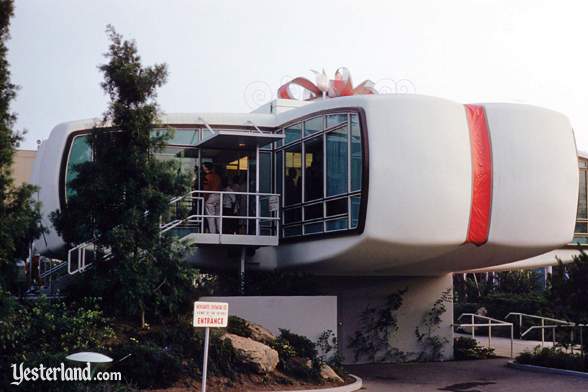
In a previous post, I introduced you all to the Monsanto (tm) House of the Future as a way into thinking about ideologies of domesticity in the 50s. Well, Boing Boing reports that they are rebooting the Disneyland attraction. I agree with Cory Doctorow, the vision is not very futuristic at all. Futurist discourses still do tell us a lot about today.

From Boing Boing:
"Disneyland is reviving its old "House of the Future" attraction -- originally, this was a wheel-of-gouda-shaped plastic house sponsored by Monsanto that opened in 1957, featuring futuristic technology like cordless phones, giant TVs, electric razors, and kitchen appliances that rose out of the countertops. It was inspriringly goofy -- and so indestructible that the wrecking-ball bounced off it and so the structure had to be disassembled with cutting torches and chainsaws.

The new version will look like a suburban McMansion and will feature stuff that sounds like rejects from CES: touch-screen home automation, automatic lights and temperature (oooh, a thermostat!), and assorted junk from HP, Microsoft, and a couple other sponsors.

I'd rather see Disney give us something built out of surplus shipping containers, filled with just-in-time blobjects that track their existence through spimes and gracefully decompose into the manufacturing stream at their end of life. Something that at least looks like the future, rather than the model home in a pre-subprime-meltdown housing development.

link


Sunday, February 24, 2008

FCC fines FOX for pixelated strippers


From Ars Technica


FCC on indecency tear, fines Fox for pixelated naughty bits

'The Federal Communications Commission continued its indecency rampage on Friday, rejecting all appeals and fining 14 Fox affiliate TV stations for broadcasting an episode of Married By America that featured a strip show. "We find that the material, in context, was presented in a pandering and titillating manner," the FCC ruled in its Forfeiture Order. "Indeed, the whole point of the strippers' performances appears to be to titillate the brides- and grooms-to-be, and, by extension, the audience."'

But the agency's final decision on Married refused to give Fox a break for doing precisely what the FCC punished ABC TV just days earlier for not doing in a 2003 broadcast of NYPD Blue: pixelating "sexual" body parts. ABC says that they have paid its fine, but will take the FCC to court over the decision.'


more

Saturday, February 23, 2008

The Public Box

Not the best title, I know. I don’t care. I can’t lure you into reading this post with a witty tag-line. I accept that. I don’t have any ‘out-there’ remarks that make me seem far superior to the subject matter I’m discussing. I don’t know how to apply these McCarthy, Gitlin, and Barnouw reading to the TV I’m watching because I haven’t been watching a lot of TV lately. I can apply it to the television I’ve been making, but saying that sounds odd. To “make TV” seems to put too much emphasis on the fact that TV originates from a source and opens the door to questions about that source. I’ll apply the readings to the TV I’ve been programming.

I’m the student cable television manager, and do not take that to mean in any way that there is a full-time cable television manager or that there exists ‘student cable television’ on campus. My job is to program the university’s educational access channel, and let me just say that they programming available isn’t entertaining. It’s difficult to do this when I’m fairly certain that the public sphere has been dissolved. In broadcasting ing ‘the public interest’ it seems as though TV has encapsulated the ‘public sphere’ and slowly compacted and shrunk it down until it fit nicely into a 15” TV box. Sure, some public sphere has escaped TV’s control, but I would say that in retreating out of the broadcast box, they public sphere was broken into so many tiny pieces that we have what are more accurately called “public bubbles.” People still talk, but it’s done in much smaller numbers and separated groups. The discourse rarely coalesces into a form that forces its way into mainstream print and broadcast news. So the job of programming educational lectures out to the community often seems inescapably pointless. People watch TV to be entertained, they do not look for a public sphere in TV.

I (still) Love Lucy

It sure is great when a woman loves her husband enough to give him a set of black lungs, thanks Lucy. So what was the importance of the episode either in contrast or within a parallel/comparative view of the readings? Well gosh I wouldn’t know exactly what the parallel between hegemony or bar TV is with that of an episode of I Love Lucy so I will have to try to make it seem like I might. Here we go…

Television has always been growing, either in reach, content, or both. What is cool about the episode of I heart Lucy is that I can still laugh at it. I’m still totally down with getting a good chuckle out of Ricky Ricardo’s crazy laugh and people going berserk even when they have tried to plan out their exact actions if she says it’s time to have the baby. Television has always been changing and people have always been buying into it in some way or another. Television sets are now in every place you could possibly imagine them, not just bars, bringing in more people and stealing money away from whatever business representative who wants to claim they are losing money from it being their, either bar owner or other. The reach is incredible and whether or not the content has always been able to keep up with it, the content has been pretty good too. The lowest common denominator shit can go, that’s not what I’m talking about. I’m talking about the ideas that have stuck around for so long that they are apart of us, not just culture, but any one of us as individuals.

Hegemony aside TV has been inserted into our lives because it has been such a pliable and versatile idea that it reshapes and reshapes until everything works out for TV in the end. What happens though is that because it works out for TV it will inevitably work out for us. Those who want the money will get the money and those who want to make us laugh will make us laugh. Maybe everything is different, but then again maybe not. There is a tangible reminder of the world resting soundlessly over most bars, but then again it was always out there anyway, so why try to sit in the dark and avoid it?

Book recommendation for this week: Apex Hides the Hurt by Colson Whitehead.
(to avoid appearing as a pretentious dick I will discontinue book recommendations after this week)

Thursday, February 21, 2008

This Rounds On Me!

Ahh nothing like enjoying one’s self at a good ol bar. The people, the atmosphere, and yes the conversations. Whether it’s a conversation about what drink your having, to the convo consisting of why your significant other is such a B****, the bar has it all. First thing I want to comment about is that last Tuesday we talked about how only sports play at bars….well I went to the Library on The Hill last night and the Real World-Road Rules Gauntlet was on…not even kidding. Either way the bar has always been a place to take your hat off and come over unannounced, the type of place a stranger can quickly become your long lost brother. The best time to be at a bar is if a not typical, large group either from a wedding or a bus trip stop in because they have stories that you’ve probably never and will never want to hear again. The bar has always had a sense of equal ness and everybody there at that moment isn’t better than anyone else. The times are definitely changing and now when people talk about going to a bar it consist of taking two hours to get ready, the music at the bar is not background music (it’s the type that makes me lick ears to get a point across), and not getting a bar stool consists of dealing with a chick that thinks she’s way hotter than she really is. Nate said it best with “I don’t need a skanky Eskimo bartender to have a good time.” Those types of girls aren’t interesting; give me a toothless bartender with a bruised eye…now she’s got a story! TV are located in every bar these days but the true old school bars (with PBR in bottles and Old Mil on tap) definitely stick to their roots and either have it on mute or behind the bar. TV hasn’t done anything bad for bars, it probably brings in a broader audience and gives the loners (who are alcoholics) something to look at and not look so…alcoholic…

Tuesday, February 19, 2008

Trashed on Tuesdays: An Exposé on Intelligent Thought and Hard Liquor

Bars just aren’t what they used to be. I long for the good old days of incoherent lifestyle-critiquing rhetoric: the kind of problem-dropping public speaking that can encompass everything from sports to politics to your wife’s mother, the kind of chatter that shows no mercy toward strangers on a barstool, the kind of oratory wit that gets exponentially more intelligent per scotch whiskey. Those were the days, my friends. Those were the days.

These days, a typical late night bar excursion climaxes with a conversation not unlike this: Authors note: To achieve the full effect, make sure to scream the following lines aloud over a combination of six competing television sets and bad karaoke.

“Where are you from?!?”

“What?!?”

“I said where are you from?!?”

“No…I don’t know this song!!!”

“That’s not what I said!!!”

“What?!?”

“What’s your…nevermind!”

“You don’t know my name???”

Back in the 1940s, working stiffs were heading to their favorite watering holes for hearty conversation and a local brew. As television became more prevalent, hearty conversation was replaced with uncomfortable silence, a drinking hierarchy, and far too much “shushing.” Caught in an era that I’m not exactly sure I belong in, it’s interesting to me that today, I seek out places that promote exchanges of witty banter. Lately, I sense that there’s an overwhelming feeling that one needs to go somewhere for a specific reason. A good sit-down chat has taken a backseat to thumping neon lighting or (God forbid) Wednesday night karaoke at the OP. Those 40s boys had it right. Good conversation and expression of ideas is what keeps people sane. That beings said, you point me to a hole in the wall bar or a coffee shop without the nuances of modern technology and you’ve got yourself a new loyal patron. It’s just like I always say, “I don’t need a skanky Eskimo bartender to have a good time.”

Big Brother vs Dwight "Superman" Howard

So the idea of "liveness" comes back into play with what I watched this week on TV. I checked out the NBA All-Star festivities this weekend, and also been in tune with Big Brother 9. I usually don't watch reality TV, but a friend of mine from home is actually on the show so i'll make an exception. Liveness and sports doesn't really play a big role for me, I usually just catch a replay or watch the highlights on ESPN. However I think it plays a big role in reality TV. My roommates and I subscribe to Showtime and Starz, so we get the Big Brother After Dark from 11pm - 2am every night. Yes, every night it's Live from 11pm - 2am, so most of the time we know what's going to happen on the primetime episode before it happens. I also believe CBS offers 24/7 live coverage on the house for a monthly fee. So the question is, are we taking liveness a little too far? Do we really need to see what each person is doing 24 hours a day? I guess I don't care about the show that much. For me, the primetime episodes are enough, the After Dark special every night gets a bit tedious. I think it is a bit ridiculous that they have this much coverage on the show; part of its been ruined because I knew what was going to happen. Is it a possibility that other shows will do this? Could we see a Real World 24/7?

Government Television...

Okay..so I really don't know what I am supposed to be blogging about, but I am going to just discuss the idea of government control in television. In my view, I don't think that there is any way that the government could simply give up control and allow for complete freedom when historically, the reigns have been held tight. While people may bitch about the government interfering with our ideas and propaganda being sent out over the airwaves, they need to understand and realize the type of society we live in. If content producers were allowed to upload whatever they please we would have many ideas floating around out there for anyone to see......oh....wait....I think that has been invented already. I don't know, but I heard about this new thing called YouTube where you can upload many things and ANYONE can watch them...at any time... Now yes, i understand that this isn't television, but I honestly believe that eventually, the internet will be people's main source of entertainment. I have previously blogged about this, but I feel that if people took advantage of this and uploaded whatever it is that they produced on both a streaming media website as well as a torrent tracker website then this content could be viewed at any time, in both full and streaming quality....with little or no government involvement. 

I also believe that if television networks continue to load their programs onto media sharing services such as iTunes and viewers also purchase this programming, the popularity of this will rise. The prices are too high for me right now, to pay to watch a show that I will only watch once, but...if they would allow for a sort of subscription service that would let users view the program once and cut costs, then I would consider using this as my main viewing source...

So...as far as my blog goes, this is the end, I really don't know which ones I am missing

Monday, February 18, 2008

We Get What We Ask For

The Streeter and Sterne readings play a role in today’s society based on the facts that the government will always be apart of the broadcasting world and we as viewers do (kind of) have a say on what we want to see or hear. Epley talked about people in the Midwest demanding they get the same TV getup that the people on the West and East coast were getting, and they did. This can be seen today when relating to people voting by either texting or via email when shows go for a user based programming that allows us as viewers to be apart of the action. American Idol, Flavor of Love 3, and even the WWE have a viewer based paper view where all matches are picked by fans. Sure we can’t have exactly w hat we want because not everyone in this country thinks alike, plus “the man” is always involved to make sure he gets what he wants as well. When Epley brought up things about “vertical integration” and how a company had the power to control production and control where viewers could see the finish product…nothing in present day really came to mind. Monopolies aren’t easily seen these days because large companies have a lot of smaller ones named differently and companies still may not officially own everything but the major ones definitely have a hand or two in the cookie jar. Last week we got in a debate about how “strong” the FCC is and a lot of what would happen if’s…The whole Don Imus incident is the most recent, public seen where the FCC stepped in, but we know how that ended and Don has his stupid show still. Like everything is America “if there’s will there’s way” and “everybody has their price.” I don’t know how it all works and my question is, “Does anybody, and where do they live?”

TV For Us Based on Women...

Ok I’m not sure what people have been blogging about, but if I’m correct I have yet to explain the comparison between Spiegel’s book to present day TV. The similarities are extraordinary, someone could easily look through women’s magazines and suggest they’re TV shows based off the material in them. From all the how to programming of today’s TV ranging from cooking to creating, I’d go so far as to say present TV is based off women’s magazines. Sure there are “guy friendly” stations, but compared to all the women based stations/shows, it’s not even close. Epley talked about the saying “from the angel in the house to the heaven of suburbia,” and how it dealt with the beliefs that women’s beliefs are more important than men’s, and I an honestly say a lot of TV these days beliefs that too. Women are all over TV telling men about everything form how to romanticize your lover to even sports interviews! There are shows all over TV about how to lose wait, how to find that special one, and also how to dress to impress. Basically, it all can be read about in women’s magazines, making me assume TV can be studied this way and Spiegel had the right idea. If I really think about it, companies advertise to women really hard because if a women is persuaded to believing she really needs the product or whatever, she’s going to get her significant other (who happens to be a guy) get it for her. Win over the women, the man with slowly but surely being coming along for the ride. The episode of Honeymooners was a great example of how a woman is convinced she needs something and to get it she needs to persuade her man to get it for her (typical women…). But anyways, Spiegel’s opinions can be seen in today’s society and like Epley said the book is timeless.

PS we should watch more Honeymooners episodes…

Saturday, February 16, 2008

I Broadcast in Blue


I don’t know if anyone else will know what I’m talking about, but way back in the day I got a TMNT sticker book for my birthday. It was essentially a comic book that you had to buy packs containing gum, a trading card, and a couple stickers, and then you could put those stickers in the book and eventually put the story to together (an ingenious product that created an endless cycle of buying those packs). I just did a web search and found that they did it for the new and not nearly as good TMNT series/movie.

Anyways, I bring this up because a couple of the stickers were very cool. These stickers essentially had two pictures on a single sticker, one printed in blue and one printed in red (I couldn’t find an example on the web, but I PSed the concept real quick-like). To look at them with one’s plain-old human eyeball, they would be very jumbled. But, when you looked at the picture first through a blue-tinted section of opaque plastic or cellophane and then through a red-tinted section of opaque plastic or cellophane, you would see two separate comics that progressed the story (if you looked at them in the right order). Very cool.
I bring this up because of the reification process pointed out by Sterne and Streeter. We’ve come to accept this rigidly segmented distribution of an incredibly fluid spectrum. It just made me wonder what possibilities exist for the ‘medium’ or ‘ether’ or ‘airwaves’ or any of the other names that have been given to the vast range of lightwaves we become aware of in these last hundred and fifty years. I can’t go deeper than that and also don’t feel the need to for an idea-based blog. It’s just that technologies seem to be consistently developed to improve our utilization of the spectrum space as we current understand it to be appropriate to do so. Cramming two images into the same frame by breaking them into separate blue and red spectrums is an efficient use of space, but it doesn’t allow for the full range of depth and detail that can be found in using both spectrums together to create one image. I know we’ve kindof utilized broader ranges of spectrum for television broadcast, but what else has been researched or developed that, while taking up more spectrum, allows for more depth and detail to be transmitted? That’s an actual question, if anyone knows/has an answer.

Friday, February 15, 2008

WTF UHF?

So, hokay. There is this thing that everyone ought to have a chance to experience and we should totally give it to them if they can pay for it. I’m so totally serious that I feel like God in a way, you know what I mean? I’m just such a giver (and taker if they can’t cover the cost). We will set up as much of a monopoly as we can so that not a single human being can imagine a world without television and a television without us at the helm. You may all praise me now if you wish, I am, in fact, the smartest man alive.

Sweet, that was my brief overview of what the people in charge (back in the time frame of the reading) would talk like if they were A) from group X and B) talking about themselves as honestly as possible. We’ve been given a sweet relaxation device, but we’ve been given a million different other things with it, most are not so hot.

Utopian dreams are possibly my favorite thing to daydream about, their at least in the top five. However, the idea of TV bringing the world together was most likely never really believed past the typical dream world of someone like Marconi from way back in reading number one. Even he was, I’m sure, not really a romantic thinker. What happened to the people was that television became like McDonalds (I will be inserting McDonalds wherever there is a possibility of using the word crack). People were hooked. They fought for television to be brought to them and for the government to work to their better interests of being entertained and groomed to be consumers, the second part was a little less obvious at the time I’m sure, but it was there.

It really McDonalds me up to think about how much television and any related medium has been effectively marketed and protected by both those distributing and consuming the products, that it is a “right” to view television. Really it is a right to view and without the give and take of “the system” (that is the end of my use of non-visual quote fingers for this blog I swear) we wouldn’t have the freedom to consume both creative shit being broadcast or all the commercials that create intervals in the viewing of said creative shit. Thanks greedy marketers from the past, we owe you our livelihood, without it we would be reading books, and I don’t even want to imagine a world like that.

Book recommendation for this blog: Tin God by Terese Svoboda
I just returned it, I promise it’s in.